
Your product is ahead of your story. Sahand Dilmaghani has told Terra Kaffe's origin story on podcast after podcast: a first-generation American who couldn't find the machine he wanted, so he built it. Your website doesn't mention him once.
Part of an ongoing series: great products, and the stories that haven't caught up to them yet.Here's what a visitor meets on your About page, and then in the one section of the site labeled content.
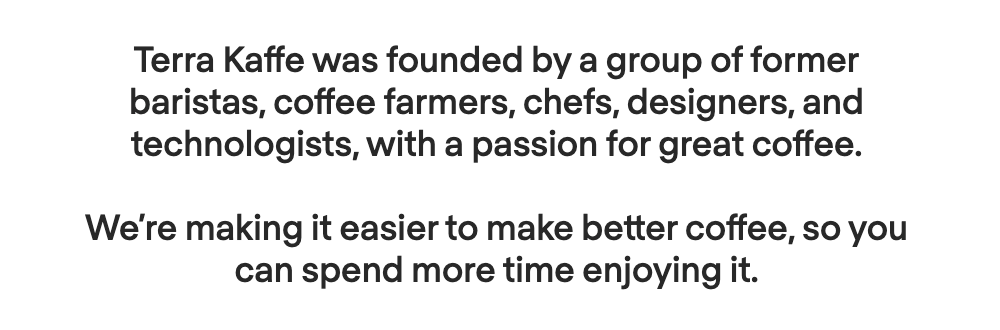
Terra Kaffe was founded by a group of former baristas, coffee farmers, chefs, designers, and technologists, with a passion for great coffee.terrakaffe.com · About
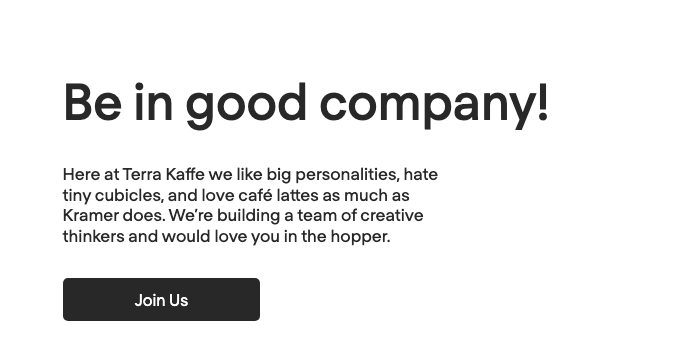
We like big personalities, hate tiny cubicles, and love café lattes as much as Kramer does.terrakaffe.com · About
One part European chic, one part hey-I'm-walkin'-here.terrakaffe.com · About
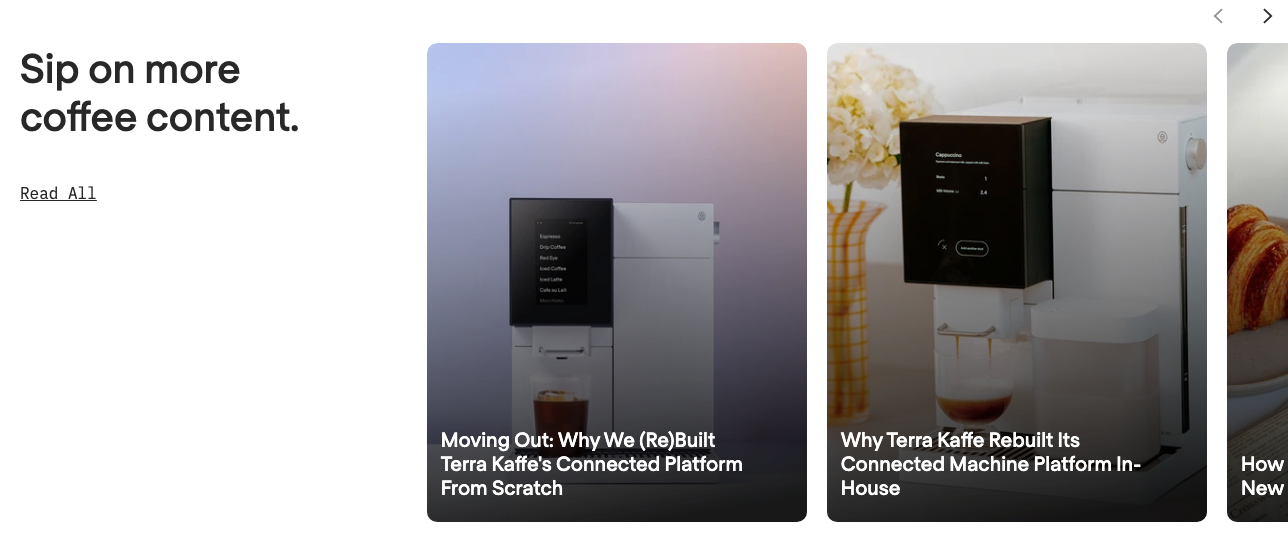
TK-02 Firmware v38.0.0: Smarter Low Water Alerts, Drip Coffee Recipe in the Appterrakaffe.com · Coffee content
TK-02 Update v37: Skip Wake Rinse, Use Less Water, Start Fasterterrakaffe.com · Coffee content
Why Terra Kaffe Rebuilt Its Connected Machine Platform In-Houseterrakaffe.com · Coffee content
That's not a coffee brand's story. That's a product roadmap. Somewhere between "founded by a group of" (anonymous, plural, could be any startup) and a feed of firmware updates and platform rebuilds, the person who started this company disappeared.
Sahand Dilmaghani has told it on podcasts and in the press. He came from electric scooters, not coffee: Head of Corporate Development at unu, a Berlin e-scooter startup, after a run in investment banking. He studied Chinese, did an exchange in Beijing, and started Terra Kaffe because he wanted a bean-to-cup machine with real design sense and couldn't find one on any shelf. That's a specific, ownable "frustrated enough to build it myself" story, from someone who'd already watched a hardware startup get built from the inside.
And there's a deeper layer. He's a first-generation American. His parents, both architects, came to this country and raised him to see things through. A son of immigrants leaving a banking career to build a machine from scratch is what that opportunity looks like when someone actually takes it. That's an American story, and right now only podcast listeners get to hear it.
Your About page swaps him for "a group of former baristas, coffee farmers, chefs, designers, and technologists," a sentence so generic it could describe half the brands on Kickstarter. The firmware notes aren't nothing. They show real product velocity, and owners want to know about low-bean alerts. Even the newest posts, about rebuilding the app platform, are about the software, not the person. The brand has quietly redefined content as product updates, and in doing that, it stopped telling anyone why the company exists.
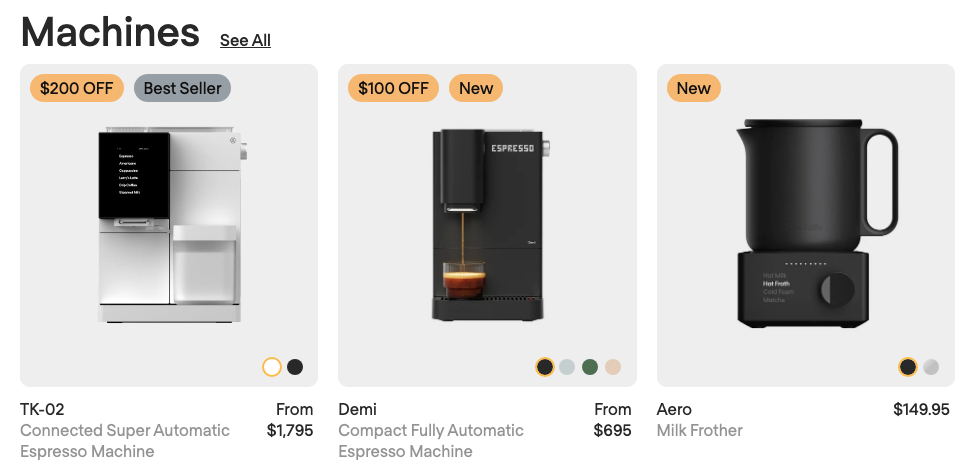
Meanwhile, the product line keeps moving. In June you launched Aero, a milk and matcha frother, and it pulled in over $150,000 in pre-orders before a single unit shipped. That's three products now: the TK-02, the Demi, and Aero, stocked at Nordstrom and Bloomingdale's. The company is clearly moving fast. The founder's story still isn't on the site, so nobody gets to see who is behind all of this, or why he keeps building it.
You're proving the machine gets better every month. You've stopped explaining why anyone thought it needed to exist.
Your Instagram is the best-made thing you publish. The art direction is real: slow espresso pours, a hand on a brushed-steel dial, iced coffee lit like a whiskey ad. It does one job very well. It shows the machine is easy. Touch, brew, done.
Now look at who's in it. Your three pinned posts are Aero, Demi and TK-02, one product each. Across the top twelve posts, it's machines, drinks and hands. The only faces are models in one lifestyle scene. The bio leads with press credits: "Featured in AD, FastCo, Food & Wine, Bon Appétit." It doesn't lead with a person. The founder who tells this story on podcasts isn't in the grid.
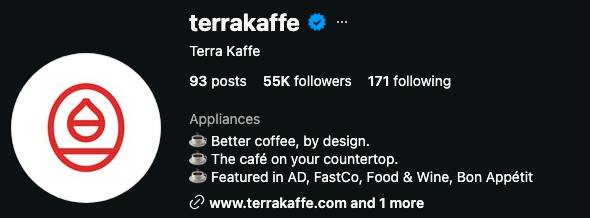
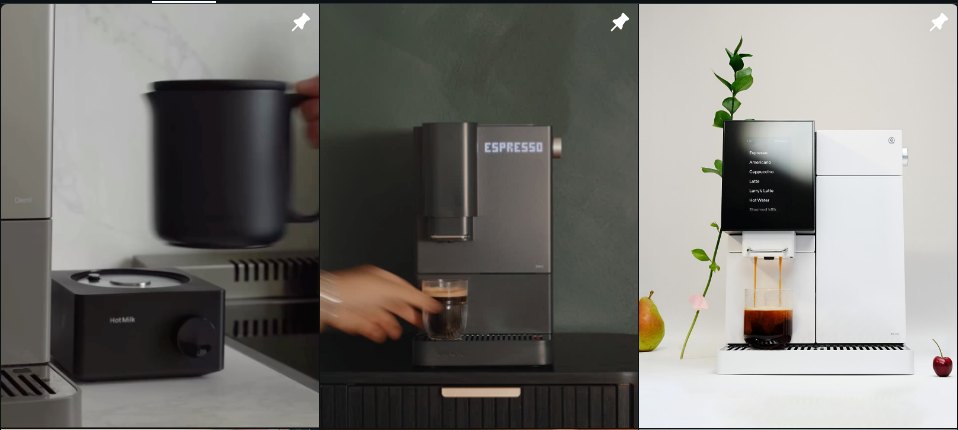
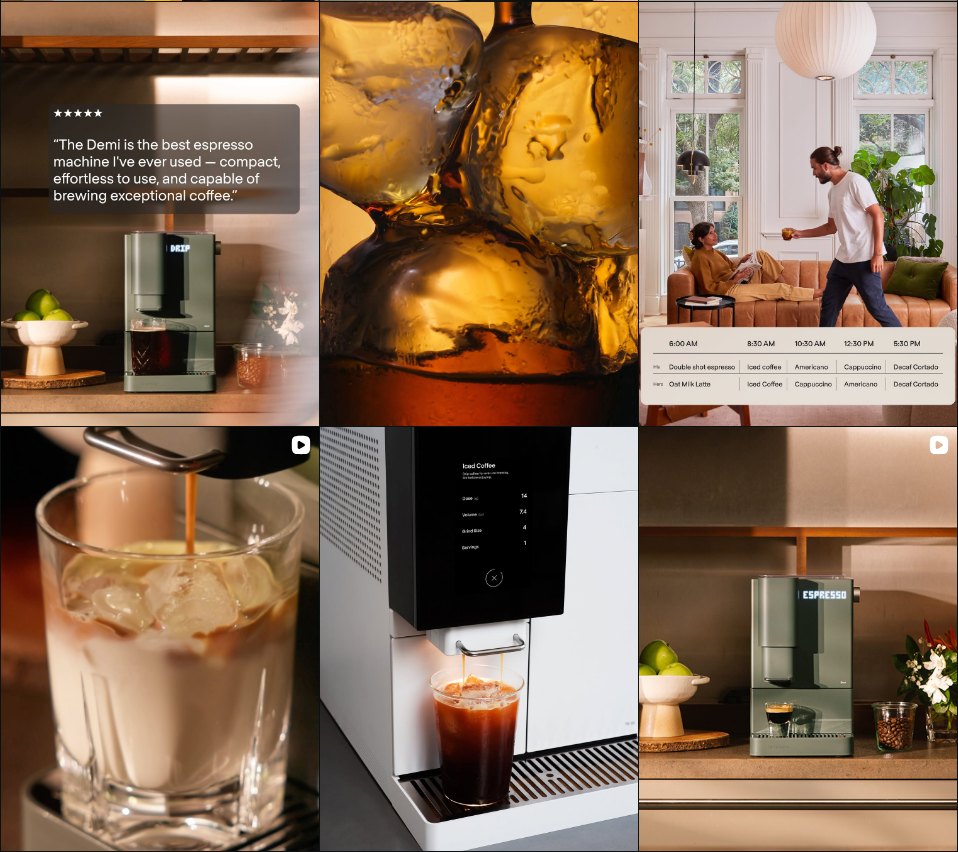
Showing that it's easy is how you get someone to consider the machine. Showing why it exists is how you get them to pay close to $2,000 for one instead of settling for something cheaper. Right now the feed does the first job and skips the second.
Terra Kaffe is what happens when a founder who couldn't find the machine he wanted stops looking and builds it.
Not "a group of former baristas and technologists." Sahand Dilmaghani, by name: an outsider to coffee who'd seen a hardware startup up close, frustrated enough by the gap between what specialty coffee could be and what a countertop machine looked like that he built it himself. That reframe gives every update a reason to matter. "Smarter low water alerts" is a fact. "The guy who couldn't find the machine he wanted just made it smarter" is a story.
Same machine, same updates — a person instead of a changelog. Conceptual mockup, not Terra Kaffe's live site.
The first-generation kid who went from banking to e-scooters to espresso, the "couldn't find what I wanted" frustration, the hardware-startup experience that let him actually build it. It's a real founder arc, already told on other people's podcasts, unused on the one site that's supposed to sell the brand.
Keep shipping updates. Stop treating them as the whole content strategy. One line of "why we built this," tied back to the original frustration, turns a changelog entry into evidence that someone still cares.
"Hate tiny cubicles" and Kramer references are generic startup voice, written to sound fun rather than to say something true. Cut them for the specific, real story you already have.
Keep the product beauty shots. Add one recurring format with Sahand on camera, 30 seconds per launch or update: what bugged him, what he changed. Aero was the perfect first episode. The next launch doesn't have to ship without its story.
You've spent years proving the machine gets smarter. It's time to spend one page proving the person who built it cared.
The founder film, the rewritten About page, a reason behind every update — that's a Brand Film. We already see the story. Let's make it the headline.
Get a Teardown of your brand