
You've named the enemy, won the lab tests, and put Jack Nicklaus on the box. But it's spread across four pages with four different headlines, and none of them shows the person whose game changed.
Part of an ongoing series: great products, and the stories that haven't caught up to them yet.Each one is a good line. Together they're a product, a partnership, a philosophy and a scorecard.
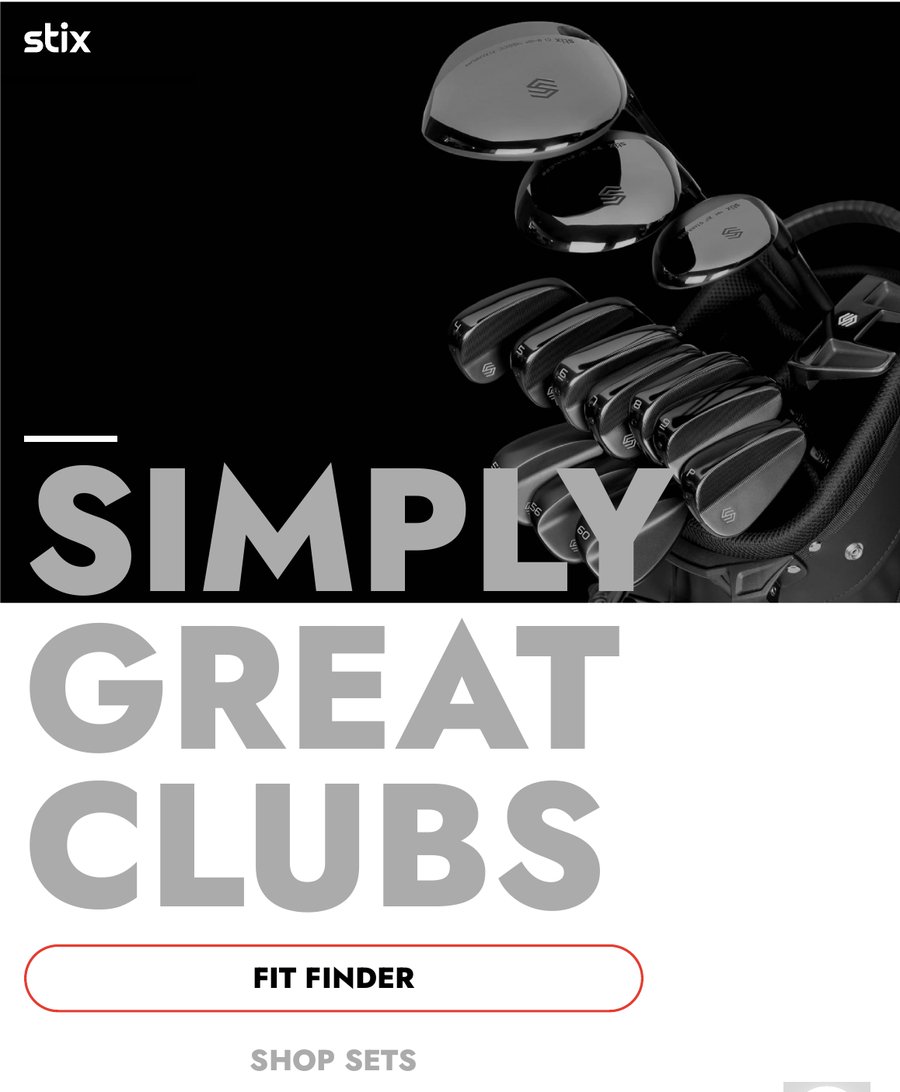
Simply Great Clubs.stix.golf · homepage
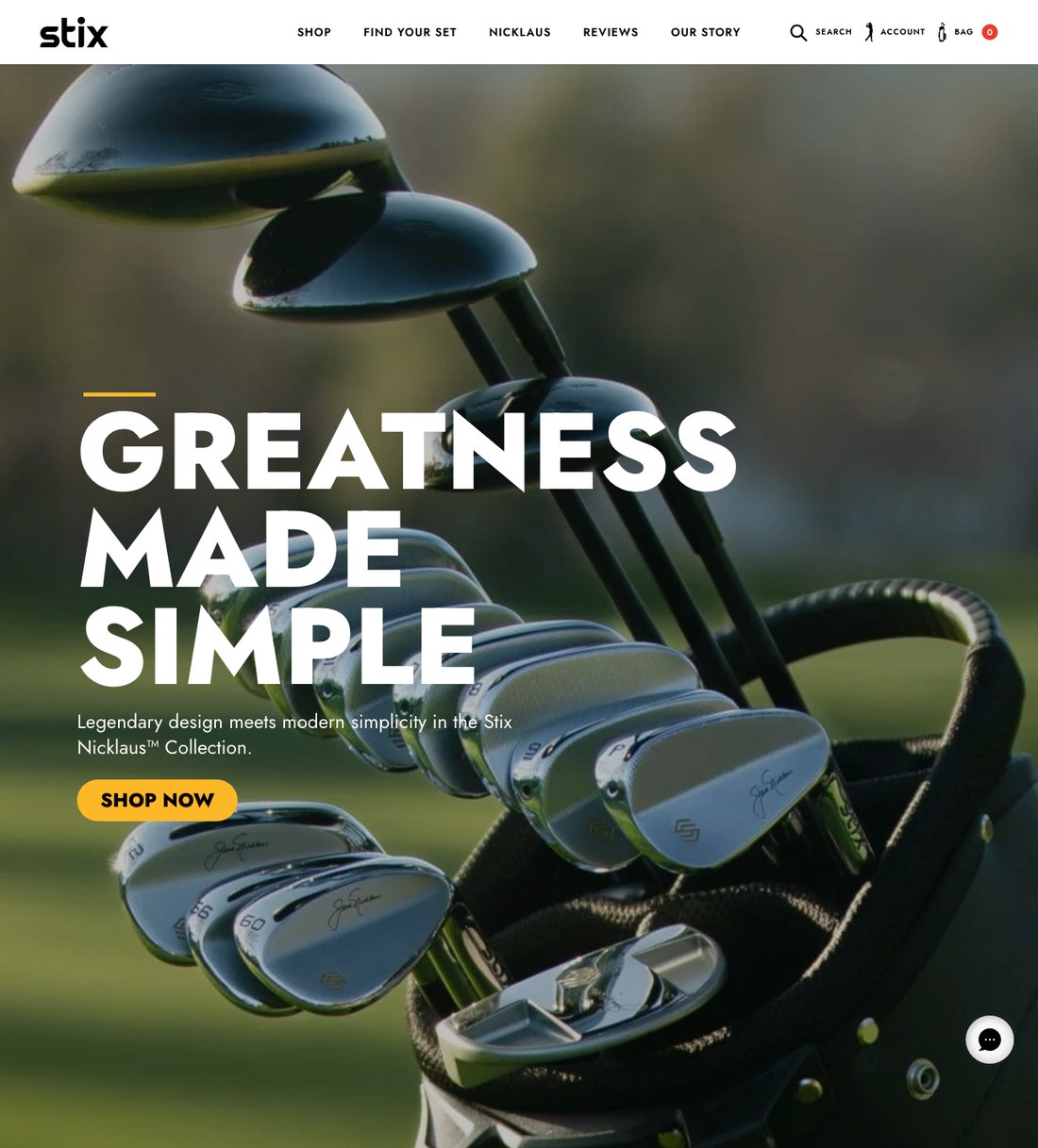
Greatness Made Simple.stix.golf · Nicklaus page
Golf got complicated. We didn't.stix.golf · Why Stix
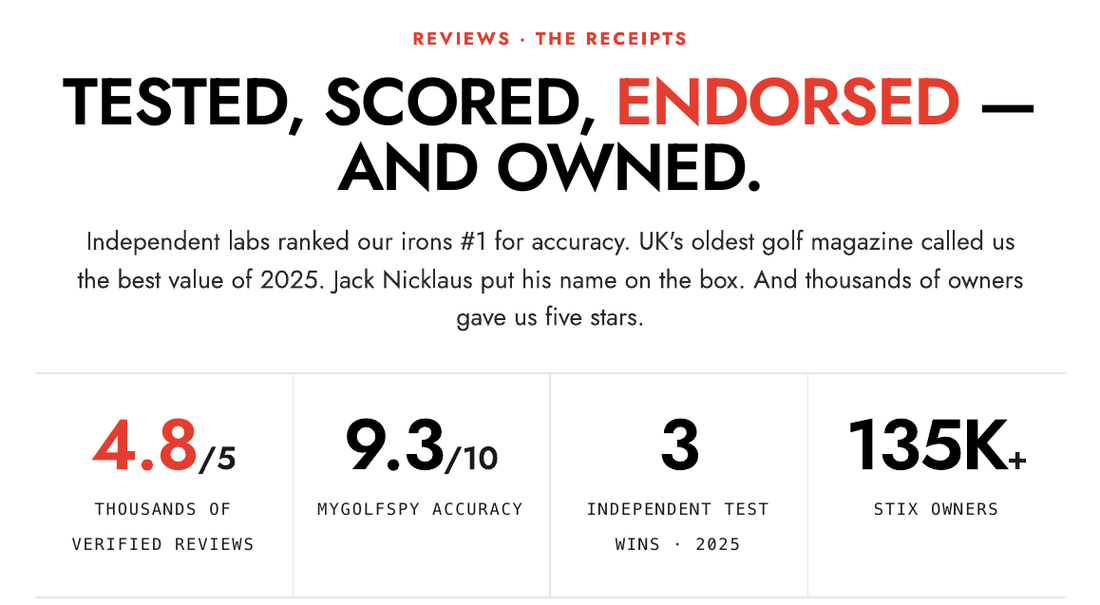
Tested, scored, endorsed — and owned.stix.golf · Reviews
When did buying golf clubs get so complicated? Clubs became so over-designed, over-hyped, and over-priced. It didn't make sense to me, that's why I started Stix.Gabe Coyne, founder · Why Stix
We build for the game. More people on courses, more often, with less standing in the way. That's the whole business.stix.golf · Why Stix
As a new golfer, these clubs made the game feel way less intimidating.stix.golf · homepage review
My wife actually plays golf now. … She's played 3 rounds in a month — more than the last 5 years combined.Dan K. · Reviews page
This isn't a brand that missed the insight. Stix has argued for a more accessible game for years, your Why Stix page names what keeps people out, and your customers tell the emotional story for you. The problem is that a visitor only ever gets a quarter of it. Land on the homepage and it's a product. Land on the Nicklaus page and it's an endorsement. Land on Reviews and it's a scorecard. The belief that ties them together never leads.
Even the proof shifts from page to page. Why Stix says 4.6 stars across 3,757 reviews and 100K+ golfers. Reviews says 4.8 and 135K+ owners. The homepage says over 5,000 five-star reviews; Why Stix counts 2,930. Each number may be right in its own context. But a visitor is reading four pages that weren't written together.
That matters because product, price and test scores are the easiest things for a bigger brand to match. A reason to exist is much harder to copy, and yours is split across four pages.
Go back to the origin. Gabe Coyne and his friends, in their mid-30s, getting back into golf after life got in the way. Buying clubs was, in his words to Sports Illustrated, "complicated, it's expensive, it's intimidating, it's confusing and it's ugly." Your Why Stix page turns that into four named "enemies of golf": exclusivity, hype, intimidation and noise. The first one is defined as "a century of unwritten rules about who belongs out here and what they should be wearing."
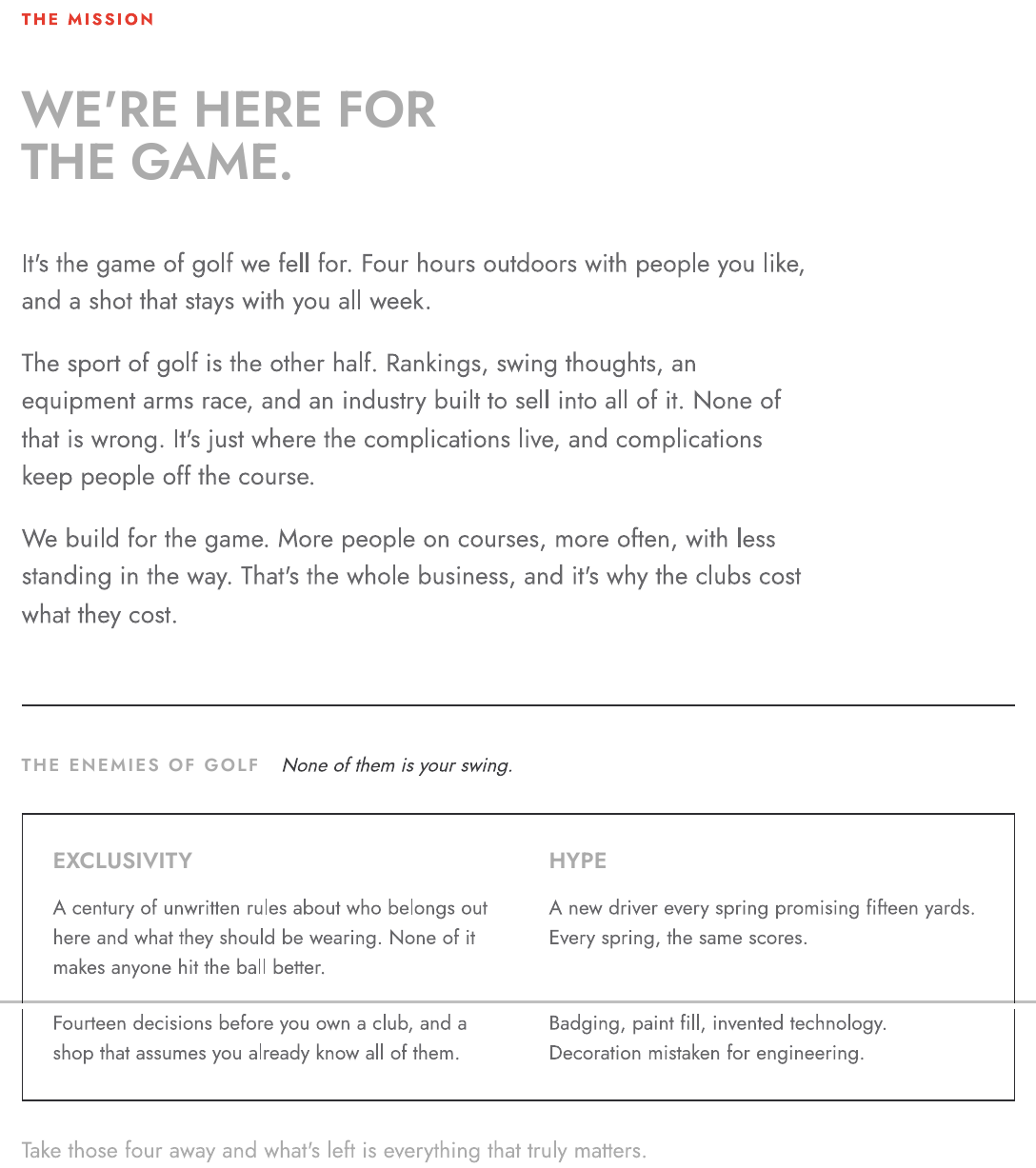
That's the hardest part of brand strategy, and you've done it: you know what you're against. But look at how it's shown. On the page that names the enemies, every photo that follows is a club. The Reviews page puts it plainly: "Numbers, not vibes." It's a confident line, and it's the tell. Proof has become the brand. Proof tells people the clubs are good. It doesn't tell anyone they belong.
Your own review mine shows it. You pulled 1,500 reviews and counted four topics: looks, quality, value and distance. Every bucket is about the clubs. There's no bucket for "less intimidating," or "I finally play," so the story customers tell about themselves never gets counted. Dan K.'s review doesn't fit any of the four.
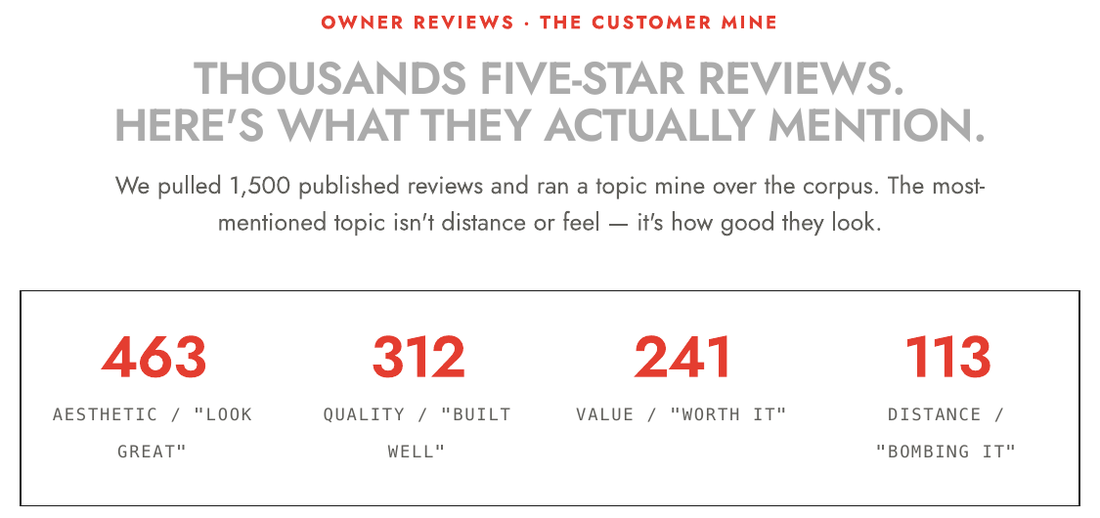
Take the top result seriously: looks win, by a lot. But read the first review you show under it: "Get compliments at the range every time. … People ask what they are. I love telling them." That isn't about the club. It's about how the golfer feels standing on the range. Even your #1 topic is a belonging story.
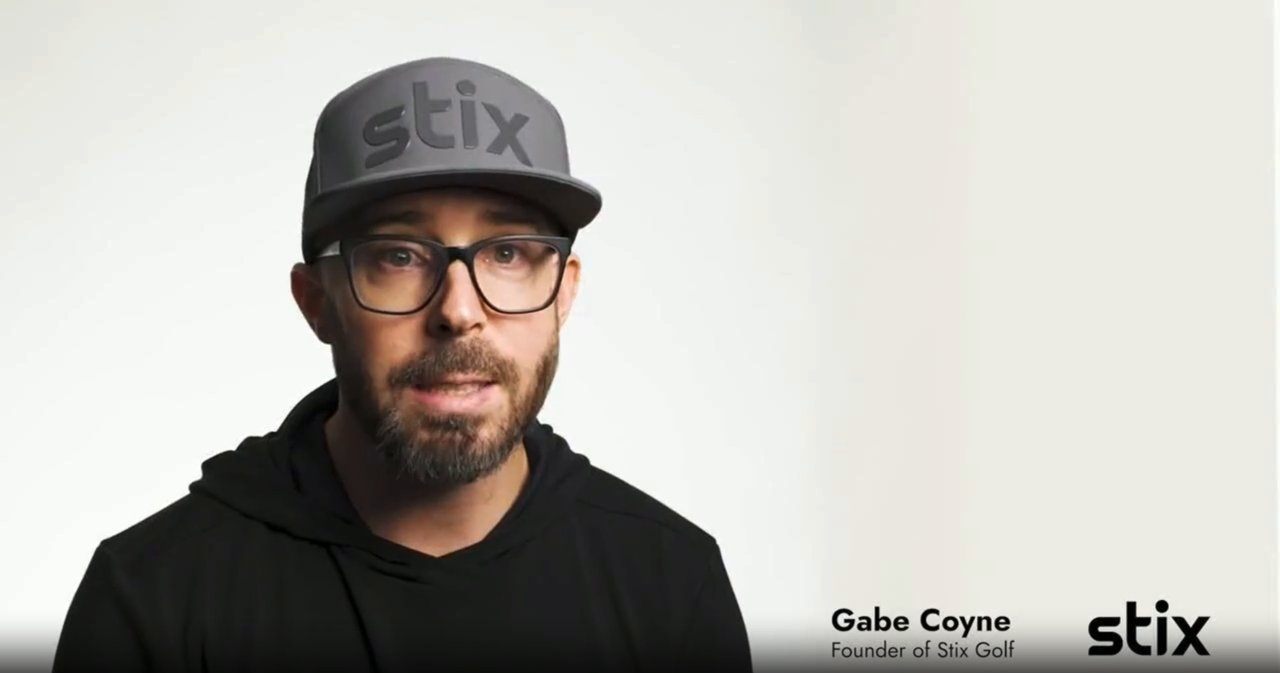
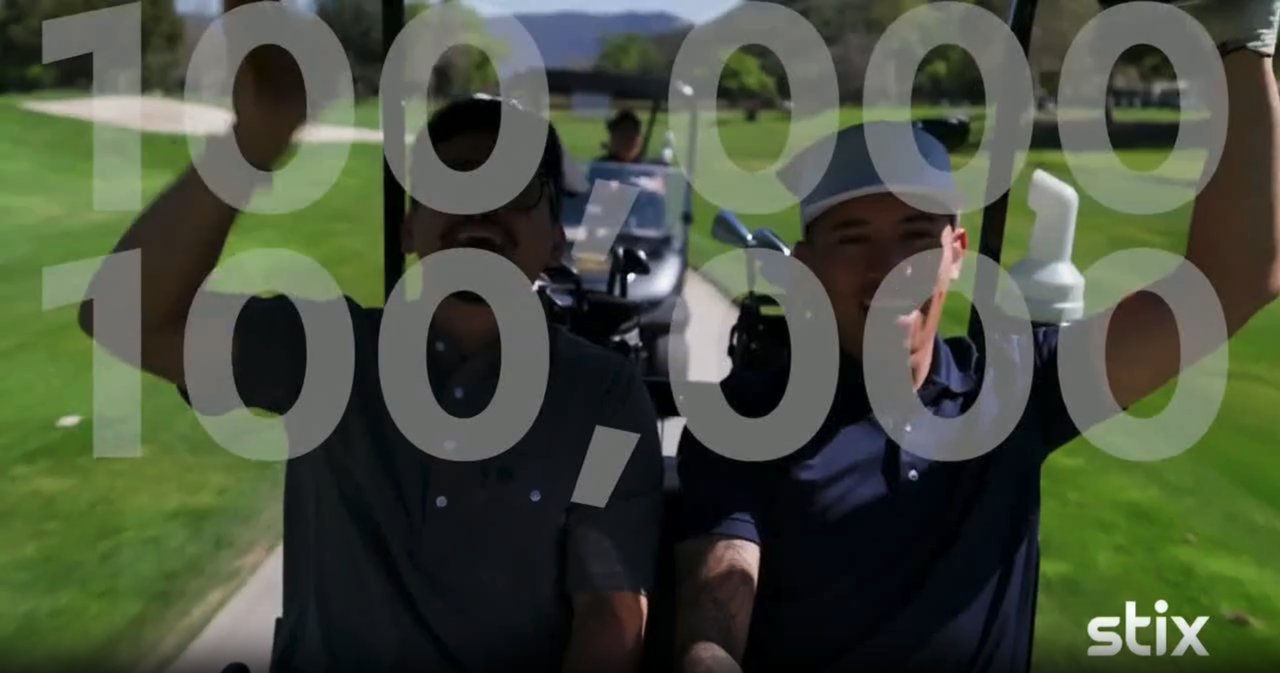
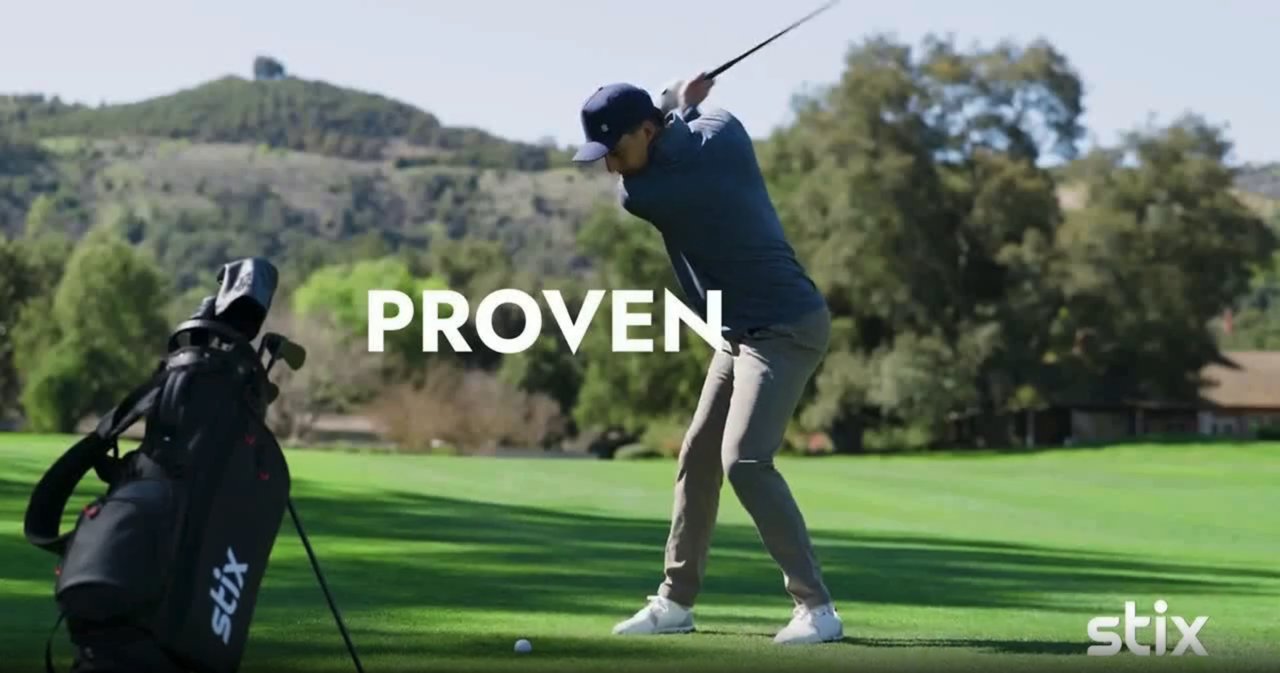
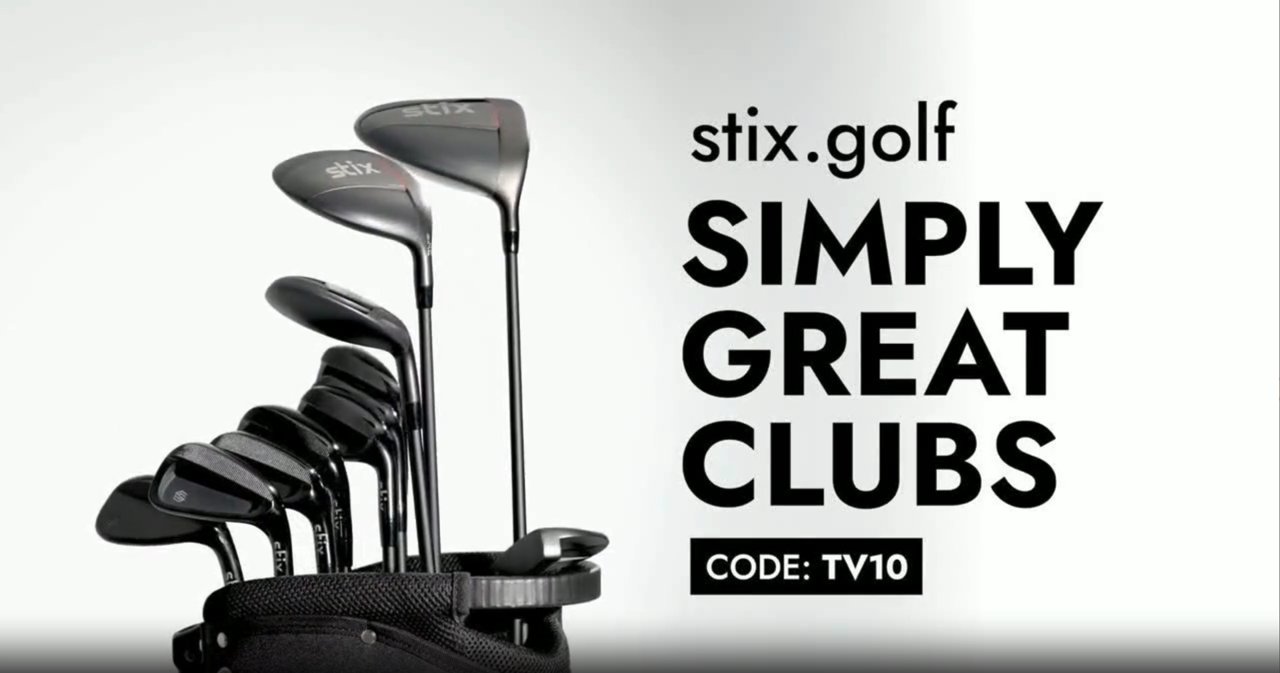
Where people do show up, they aren't your customers. Your TV spot gets the first beat right: it opens on Gabe, on camera, as the founder. Then it cuts to golfers we never meet, lays a giant "100,000" over their faces, and ends on the clubs and a discount code. The founder names the problem. Nobody is shown getting past it.
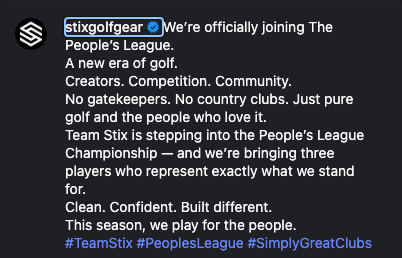
Your Instagram is where the contradiction is sharpest. In February you wrote the line this whole teardown is about: "No gatekeepers. No country clubs. Just pure golf and the people who love it." Then you introduced the people: three sponsored creators, "creators who can really play," led by a D1 athlete with a +4 handicap who shot 63.
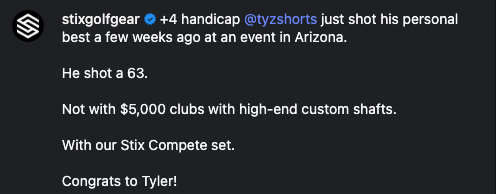
There's a good reason to sponsor a +4: it proves the clubs perform. But it's proof, not the story, and your audience can tell. A top comment on one of his videos, with nearly 500 likes, jokes about the "I'm not sponsored at all" acting job. Meanwhile your actual customers are down in the comments: "I have a set and they are perfect for me." "I use Stix myself, love the heck out of them." The people you say you play for are the ones replying, not the ones in the posts.
Your ambassador program tells the creators who speak for you what to say: "Our partners aren't pitching a product. They're sharing a point of view that their audience already agrees with: you don't need to overpay to play great golf." That's the story you hand them: a price argument. The customer whose wife now plays three rounds a month exists only as a review card.
What your own feed rewardsGabe on camera: "sleek, minimal, timeless > spaceship"
Gabe: "I couldn't find what I wanted. So I built Stix Golf."
People's League creator announcements
Award and lab-test posts
Likes on selected @stixgolfgear posts, checked Sept 2026. A sample, not an audit.
Your best-performing posts aren't the badges. They're your founder, on camera, telling people why Stix exists.
From where we sit, "quiet, on purpose" isn't just a design rule. It's mercy. No badging, no model names, nothing to decode. That's the mechanism. What it gives someone is permission to walk onto a course without feeling like they're doing it wrong, and nobody on your site is ever shown feeling it.
Your competition isn't just TaylorMade. It's every reason someone decides golf isn't for them. You've named those reasons. Now show someone getting past them.
"Built as a ladder, not a starter kit." Fourteen-club Compete sets, independent test wins, Jack Nicklaus's name on the box. You clearly don't want to be the set people outgrow, and that's smart: a starter brand loses its customers the day they get better.
But permission isn't a beginner feeling. The first-timer who found the game "way less intimidating" got it. So did the customer who "almost paid $1,800 for Callaways" and didn't: permission to stop paying for hype. The newcomer and the ten-handicap are escaping the same thing. That's a story that climbs the ladder with them.
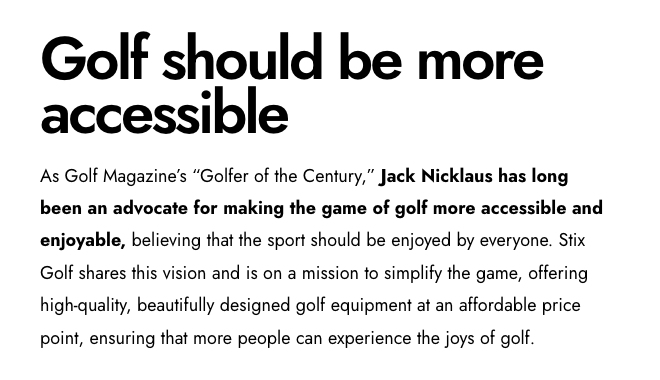
Nicklaus fits it too, with one catch. Your clearest statement of belief is on the partnership page, and it's credited to him: "Jack Nicklaus has long been an advocate for making the game of golf more accessible and enjoyable… Stix Golf shares this vision." Right now your mission lives on your partner's page.
Stix isn't simpler golf clubs. It's golf without the gatekeeping, from your first round to your hundredth.
You've already written the stance: "No gatekeepers." Right now it lives in one Instagram caption. It should be the brand. Nothing you've built changes. The design, the price, the test wins and Jack all stay. They become the proof of one idea instead of four separate pitches. And that idea doesn't cap out at beginners: it's for anyone who's tired of being told they need to earn their way in.
Same clubs, same price, a mission instead of a spec sheet. Conceptual mockup, not Stix's live site.
You've written four headlines. The Why Stix headline is the strongest because it names an enemy, and it's Gabe's. Build the homepage around that belief, and let "Simply Great Clubs," "Greatness Made Simple" and the test wins sit underneath it as proof.
"My wife actually plays golf now. … more than the last 5 years combined." That's the brand in one sentence, parked as a review card. Film real customers instead, cast from your own comments rather than your sponsorship roster: a first round, a first round in fifteen years. Then give your creators that story instead of the price line. It's one Stix has the standing to tell in a way the traditional golf brands don't naturally own.
Your clearest belief lives on the partnership page, credited to him. You already put Gabe on camera, and his posts outperform everything else you publish. Let him tell the mission in his own words, and let the partnership do what it does best: an 18-time major champion signed off on simple. That answers the one doubt every buyer has, which is whether "easy" means "lesser."
You've done the hard part: you know what you're against. Now show who you're for.
One story across every page, a film of a real customer's first round (or first in years), and the words to go with it: that's a Brand Film. We already see the story. Let's make it the headline.
Get a Teardown of your brandSources: stix.golf homepage, Why Stix, Reviews, Nicklaus partnership and Ambassador Program pages, checked 21 Sep 2026 · Stix TV spot "Complicated," Feb 2026 · @stixgolfgear on Instagram, posts from Feb–May 2026 · Founder quote on origin from Sports Illustrated, 30 Sep 2022. Interpretation and reframe are Gibeon's.